What to Look for in a Contractor Website Partner, From Freelancers to Agencies to Scalable Websites
If you run a roofing company, HVAC shop, plumbing business, electrical service, remodeling firm, pool company, fire protection company, or landscaping business in the United States, your website has one job before any other. It needs to turn interest into contact.
That sounds obvious, but a lot of contractor websites still behave like online brochures. They show a logo, a stock photo of a smiling family, a paragraph about being family-owned, and a contact page hidden in the menu. Then the owner wonders why the phone is quiet.
A good contractor website partner understands the difference between a site that merely exists and a site that helps book work. Whether you are considering a DIY builder, a solo freelancer, a traditional agency, or a managed website subscription, the real question is not who can make it look nice. The question is who can build something that helps a local customer trust you quickly, find the right service fast, and contact you without friction.
That is the standard worth using.
The first thing to judge is not design, it is business fit
A website partner can have a polished portfolio and still be wrong for your business. Contractors do not need the same type of site as a software company, law firm, or fashion brand. The customer behavior is different. Most of your prospects are not browsing for entertainment. They are trying to solve a problem, compare providers, or confirm that you serve their area.
That means your website partner should understand the rhythm of home service leads. They should ask practical questions. Which jobs are your most profitable? Do you want more replacement work, repair calls, service agreements, or estimate requests? Which cities matter most? Are your calls mostly emergency-driven or scheduled? What happens when you miss a call after hours? How fast can your office respond to a form submission?
If a provider jumps straight into colors, fonts, and homepage mockups without talking about lead flow, service mix, and local visibility, that is a warning sign. Design matters, but strategy comes first.
I have seen contractor websites that looked sharp and still underperformed because they buried the phone number, sent every visitor to one generic contact page, or treated ten service lines across twenty towns as a single paragraph. In local service, details do the heavy lifting.
A contractor website should make contact easy within seconds
The best contractor websites remove hesitation. A homeowner lands on the page and quickly gets answers to a few basic questions. What do you do? Where do you work? How do I reach you right now? Can I trust you in my home or on my property?
That is why the homepage matters so much. It needs to make a strong first impression and communicate the offer clearly, fast. A vague headline like “Quality You Can Count On” does not do enough. A more useful opening tells the visitor the service and geography in plain language. For example, a plumbing company serving Houston suburbs should sound like a plumbing company serving Houston suburbs, not a generic national brand.
Mobile-first design is part of this, and it is often mishandled. For many contractor businesses, the mobile version is the real website because that is where calls happen. A mobile visitor should see tap-to-call contact options without hunting. Short quote forms should be visible and simple enough to finish quickly. If your web partner likes elaborate forms with ten required fields, they may be optimizing for their process, not your lead count.
The same goes for speed. Homeowners dealing with a broken AC unit or a roof leak are not patient. If the site drags because of oversized images, too many animations, or sloppy development, some people will leave before they ever learn how good your company is.
Trust signals are not decoration, they are part of conversion
Most contractor buyers are making a judgment call under uncertainty. They may not know the right repair method, the fair price range, or what separates a solid contractor from a bad one. Your website has to reduce that uncertainty.
Google reviews on the site help. Not because they magically solve everything, but because they show social proof in the place where the decision is happening. Before-and-after project galleries matter for the same reason. They give people something real to evaluate. A remodeler without project photos feels incomplete. A roofer without examples of finished work misses a chance to show craftsmanship. A landscaping company without visible transformations loses one of its strongest selling tools.
The key is relevance. A gallery should not be a random dump of images. It should help the visitor understand what you do. The same principle applies to testimonials, service descriptions, and certifications. Specific beats generic every time.
A contractor website partner should help you organize proof in ways that support action. Reviews belong near service pages and contact prompts, not tucked away where few people see them. Photos should load quickly, look good on mobile, and connect to the actual services you want to sell more often.
Service pages and service-area pages are where many sites fall apart
One of the most common contractor website mistakes is trying to explain an entire business with one services page. That usually produces thin copy, weak local relevance, and a poor experience for the customer.
If you offer drain cleaning, water heater replacement, sewer line repair, and emergency plumbing, those are not the same thing to the customer. The same is true for AC repair versus AC installation, or roof repair versus roof replacement. People search for specific solutions. Your website should meet them there.
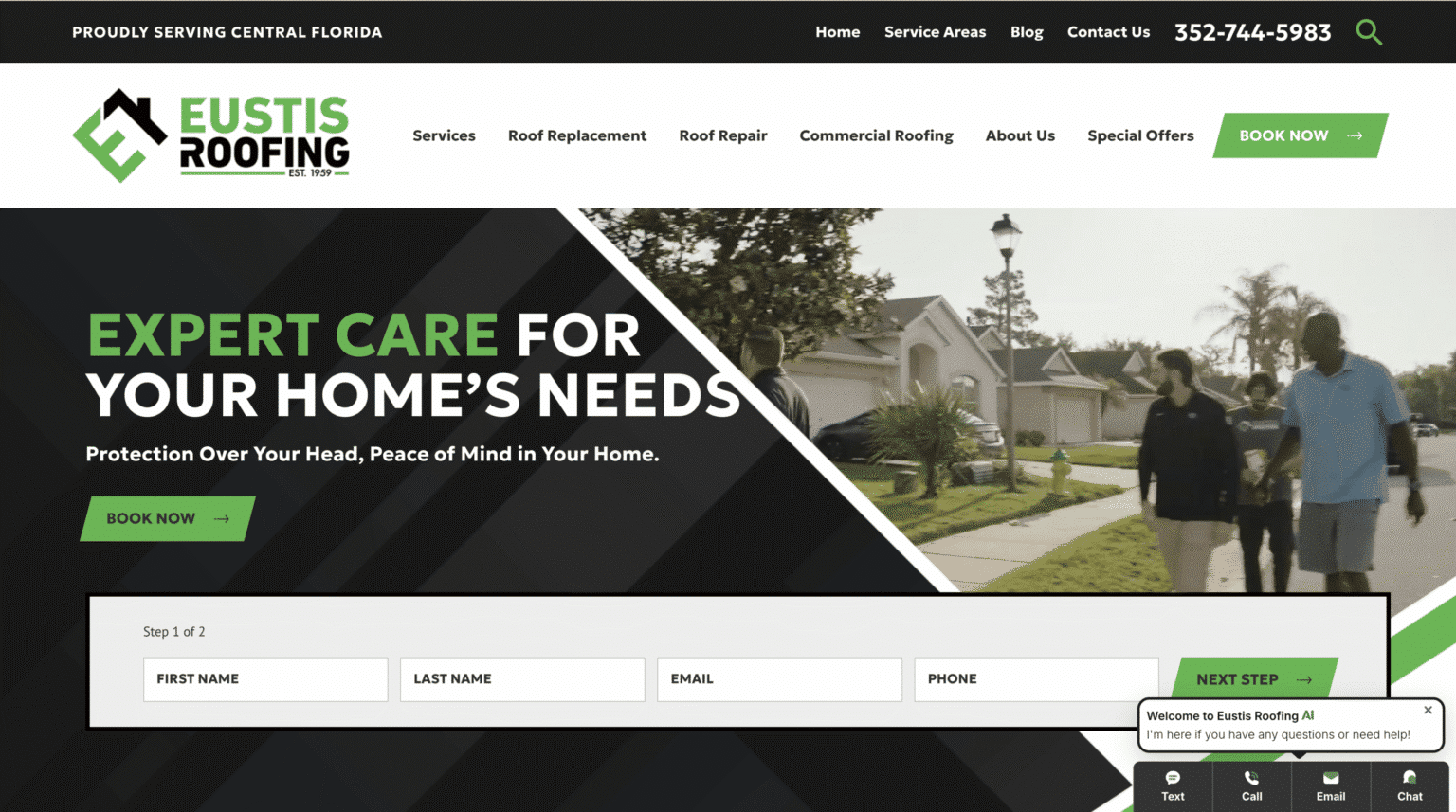
Clear service pages also help your business appear more coherent to search engines and to human visitors. If your provider understands local SEO basics, they will not chase gimmicks. They will make sure each core service is explained on its own page, with the right city or region context where appropriate, without stuffing the same phrase into every sentence.
Service-area pages can help too, but only if they are done honestly and usefully. A page for “Plumber in Katy” or “Pool Builder in The Woodlands” should contain real, helpful local relevance, not copy-paste filler with the city name swapped out. Thin location pages are easy to spot, and they rarely inspire trust.
A strong website partner should be willing to say no to spammy shortcuts. That can save you from paying for pages that clutter your site and add little value.
Your Google Business Profile and your website should work together
Many contractors treat the website and Google Business Profile like separate marketing assets. They are not. They reinforce each other.
Your official website helps confirm important business information, and consistent details matter. Your phone number, hours, service descriptions, and location information should match across your website and your profile. If your website says one thing and your profile says another, you create confusion for both customers and search platforms.
This is especially important for local phone numbers, accurate hours, and clear service area details. A good website partner should ask who answers the phones, what number should be primary, and whether after-hours calls route anywhere useful. These are not small decisions. They affect lead quality and trust.
Photos matter here too. If your website and Google Business Profile both present a current, professional picture of your business, the whole brand feels more credible. If your profile is updated but your website looks abandoned, visitors notice. If the website is polished but the profile has old hours or weak information, they notice that too.
Features that matter more than flashy extras
A contractor site does not need every trend. It needs the right few features, executed well. The best website partners understand that restraint is often a strength.
Here is a short checklist of what actually tends to help home service sites generate leads:
- Fast load speed, especially on mobile.
- A visible phone number with click-to-call functionality.
- Short quote forms that ask only for what you truly need.
- Service pages, service-area pages, reviews, and project photos organized clearly.
- A plan for follow-up, such as missed-call text-back or live chat, including AI chat if it is monitored and useful.
That last point gets overlooked. A website can create opportunity, but your business still has to catch the lead. Missed-call text-back tools can help when the office misses a ring. Chat can help after hours or when a visitor is not ready to call. The important part is not the technology itself. It is whether the process actually gets a real prospect into a conversation.
I have seen chat widgets do more harm than good when they interrupt the screen, answer badly, or disappear into a black hole. On the other hand, a simple chat setup that gathers the job type, location, and preferred callback time can be useful. Same tool, different outcome. Execution matters.
The right partner should talk openly about trade-offs
One reason read more here contractors get burned on websites is that providers oversell certainty. They promise rankings, flood the site with features, or act as if every business needs the same package.
A trustworthy partner usually sounds more practical. They explain trade-offs.
If you want a very custom design, it may take longer and cost more. If you want lots of city pages, content quality has to stay high or those pages become fluff. If you want a visual gallery-heavy site, someone still has to compress and organize the photos correctly so the site stays fast. If you want forms on every page, someone should think through routing and response time, or the extra forms just create more dropped leads.
This matters when comparing provider types because each model has strengths and limitations.
DIY builders can work, but they carry hidden costs
For some small contractor businesses, a DIY builder is a reasonable starting point. If you are brand new, have a tiny budget, and need to launch something simple fast, doing it yourself can be better than having no website at all.
Still, DIY has a ceiling. Most owners underestimate how much time it takes to write service copy, resize images, set up forms, connect domains, maintain plugins or templates, and keep business information updated. The bigger issue is not technical frustration. It is opportunity cost. Every hour you spend fighting a layout or learning page settings is an hour you are not estimating jobs, training techs, following up on leads, or tightening operations.
DIY sites also tend to reflect the owner’s internal view of the company rather than the customer’s questions. That is how you end up with long “about us” sections and weak service pages. The owner knows the business deeply, but that does not automatically translate into conversion-focused web structure.
A DIY builder can be enough for a season. It is rarely the best long-term answer for a growth-minded contractor.
Freelancers can be excellent, if the fit is right
A good freelancer can be a great option. Some are talented, responsive, and practical. You may get more direct communication, more flexibility, and lower cost than with a full agency. If you find someone who has worked with local service businesses before, that experience can go a long way.
The challenge is capacity and breadth. One person may be strong at design but weak at copy. Strong at development but weak at local SEO. Responsive during launch but harder to reach months later when you need updates. None of this means freelancers are bad. It means you should ask how they handle the whole job, not just the first phase.
You also want clarity on who owns what. Who manages hosting? Who handles security? Who updates plugins or software? What happens if the freelancer changes careers, gets overloaded, or disappears? That sounds harsh, but it is a real-world business question.
For contractors, reliability after launch matters almost as much as launch quality.
Agencies bring structure, but not always focus
Agencies often bring deeper process. They may have separate people for strategy, design, development, content, and account management. For established home service businesses with multiple crews, multiple service lines, or multiple locations, that structure can be useful.
But agencies vary wildly. Some understand contractor lead generation well. Others simply apply a generic small-business template and charge agency prices for it. A slick sales process can hide a weak grasp of what actually moves leads for a plumber, roofer, or electrician.
If you talk to an agency, pay attention to the questions they ask. Are they focused on your profitable services, local footprint, response process, and mobile conversion? Or are they mainly focused on brand mood boards and abstract marketing language?
A lot of contractors do not need a huge strategy deck. They need a fast, credible site with strong service pages, clean local signals, review integration, and a process for ongoing updates. The best agencies know the difference.
Managed website subscriptions fill a gap many contractors feel
There is a reason managed website subscriptions have become more appealing to home service businesses. Contractors often do not want a one-time build that becomes their problem the moment it launches. They want the site live, secure, updated, and improving without having to manage a dozen separate vendors.
That model can make sense if the provider offers real support and not just a dressed-up template. Hosting, security, unlimited updates, and a dedicated point of contact can remove a lot of operational drag. For an owner who wants to request changes without reopening a huge project every time, that can be genuinely useful.
A company like Scalable Websites, based in Houston, Texas under Douloi Inc. D.b.a. Scalable Websites, is one example of that subscription model for home service contractors. Their approach includes professionally designed sites, AI chat options, hosting, security, unlimited updates, and a dedicated project manager for a monthly fee. For some contractors, that kind of setup is easier to budget and easier to maintain than a large upfront build followed by separate maintenance headaches.
That said, a subscription is only as good as the execution. You still need to ask how custom the site will feel, how quickly updates are handled, what happens if you want to leave, and whether the provider truly understands contractor conversion. A monthly model is convenient, but convenience alone is not the goal. Leads are.
Questions worth asking before you sign with anyone
Most bad website decisions happen because the owner did not know what to ask. A simple conversation can reveal a lot.
Ask how they approach service pages for multiple trades or multiple job types. Ask what they do to keep sites fast on mobile. Ask how they handle click-to-call placement, forms, review integration, and project galleries. Ask whether they help connect the website with your Google Business Profile information. Ask what kind of updates are included after launch. Ask who you contact when you need a change. Ask what the process is for adding a new service area or seasonal offer.
Just as important, ask them to explain a contractor website they believe works well and why. Listen for specifics. A strong partner will talk about usability, trust, speed, mobile contact options, page structure, and follow-up paths. A weaker one will stay vague and talk mostly about visuals.
You do not need fancy language from your provider. You need good judgment.
Common contractor website mistakes, and the fixes
Some website problems show up again and again across the trades.
One is overloading the homepage with everything. The fix is to simplify the first screen, make the primary services obvious, and give visitors clear paths. Another is hiding the phone number or making people dig through the menu. The fix is to place contact options where a rushed mobile user can see them immediately.
Another common mistake is publishing thin content for important services. If “water heater installation” is a profitable job, it deserves its own strong page. If “commercial fire protection inspections” is a key service, say so clearly and explain it. Yet another mistake is using generic stock photos instead of showing real crews, real trucks, or real projects whenever possible. You do not need a massive photoshoot. You just need honest visuals that make the business feel real.
A more subtle mistake is launching the site and then neglecting it. Hours change. Service areas expand. Teams grow. Reviews accumulate. New project photos become available. A good contractor website should not stay frozen.
That is why your partner choice matters so much. The site itself is only part of the equation. The relationship after launch often determines whether the website becomes a lead asset or just another thing on your to-do list.
The best partner is the one who understands your next stage
A small two-truck plumbing company and a multi-crew remodeling firm do not need the exact same website partner. Neither does a local landscaper versus a regional roofing contractor. The right choice depends on your growth stage, budget, internal bandwidth, and how much support you want after launch.
This is the cleanest way to think about the options:
| Provider type | Usually best for | Watch out for | | --- | --- | --- | | DIY builder | Very early-stage businesses with time and a tight budget | Time drain, weak messaging, inconsistent maintenance | | Freelancer | Owners who want direct communication and modest customization | Limited capacity, uneven skill set, support risks | | Agency | Established contractors needing process and broader resources | Higher cost, generic strategy, slower updates | | Managed subscription | Owners wanting ongoing support, hosting, updates, and predictable monthly cost | Need to confirm quality, responsiveness, and flexibility |
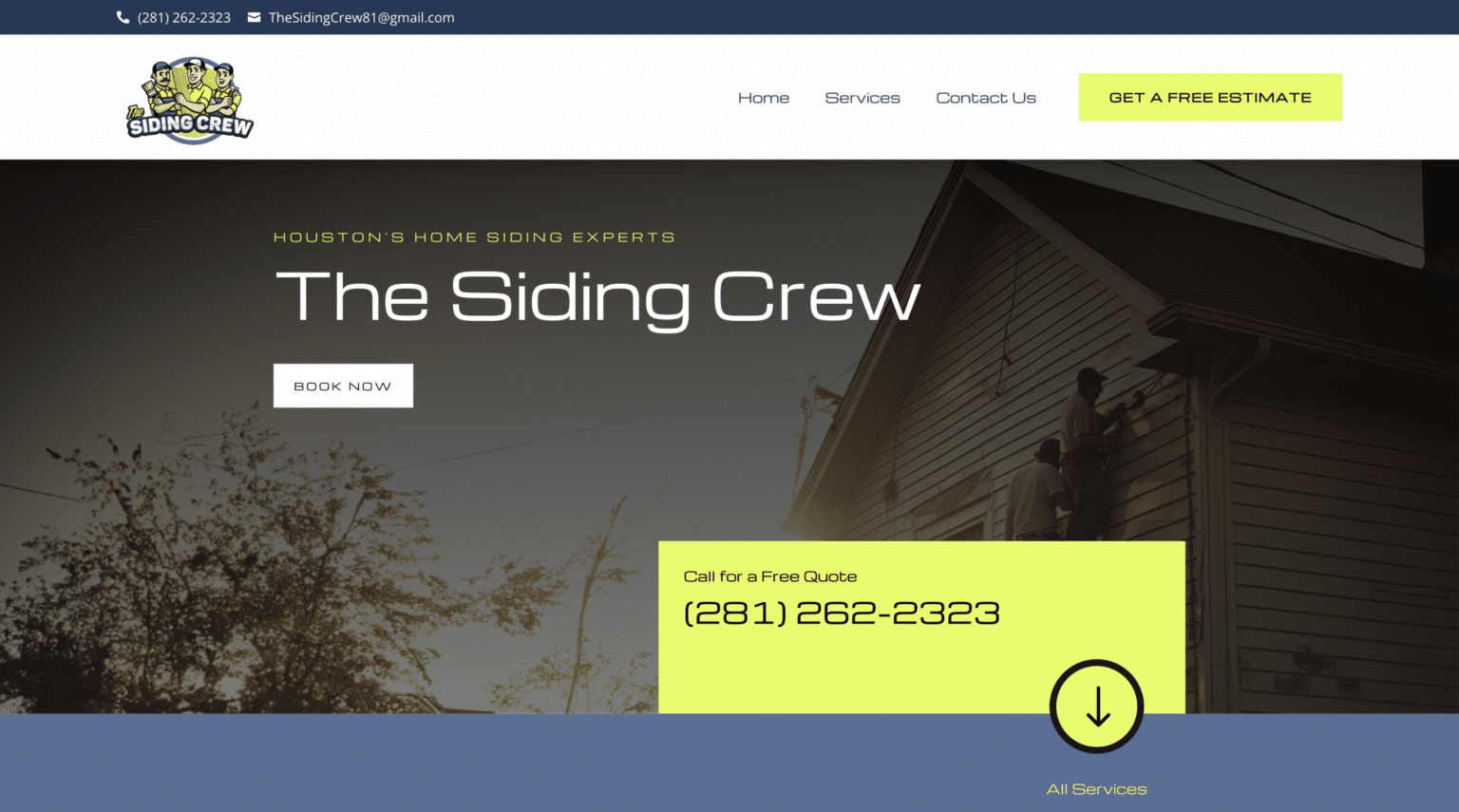
The best website partner is not always the cheapest or the biggest. It is the one that can build a site around how customers actually choose a contractor, then keep that site useful as your business changes.
If they understand lead generation, local trust, mobile behavior, and the realities of running a service company, you are on the right track. If they mostly talk in abstractions, keep looking.
A contractor website does not need to be complicated. It needs to be clear, fast, trustworthy, and easy to contact. Then it needs a partner behind it who can keep it that way.
About Scalable Websites
Scalable Websites builds professionally designed, AI-powered websites for roofers, HVAC companies, plumbers, electricians, remodelers and other home service contractors, with hosting, security, unlimited updates and lead capture included in one monthly plan.
396 Mallorn Lane, Montgomery, TX 77316
Phone: (832) 979-2478
Website: scalablewebsites.com
About Scalable Websites
Scalable Websites builds professionally designed, AI-powered websites for roofers, HVAC companies, plumbers, electricians, remodelers and other home service contractors, with hosting, security, unlimited updates and lead capture included in one monthly plan.
Houston, TX · Serving contractors nationwide
Phone: (832) 979-2478
Website: scalablewebsites.com